
What Are the Top Down Flooring Types in 2026?
Choosing a floor in 2026 is less about chasing one “best” material and more about matching it to the room. A busy entryway needs a different surface from a quiet bedroom. Moisture, pets, sunlight, subfloor condition, and installation costs all matter. For readers researching Down Flooring, the options worth comparing include luxury vinyl plank, engineered hardwood, porcelain tile, laminate, carpet, and cork. Each has trade-offs. Vinyl can handle spills, but quality and repairability vary. Hardwood brings natural character, yet standing water can damage it.
The market is substantial, but broad forecasts need careful interpretation. Grand View Research valued the global flooring market at about $390.3 billion in 2023 and projected 5.2% annual growth from 2024 through 2030. Harvard’s Joint Center for Housing Studies also projected U.S. home improvement and repair spending would reach roughly $509 billion in early 2025. That figure covers many kinds of work, not flooring alone. A useful distinction. Neither report can tell you how a particular floor will feel under bare feet or perform over a damp basement slab. This guide compares the leading flooring types for 2026 by durability, comfort, upkeep, and cost considerations. It also flags where manufacturer claims deserve a closer look. Real homes are messier than product charts. Check warranties, installation requirements, and sample colors in your own lighting before deciding.
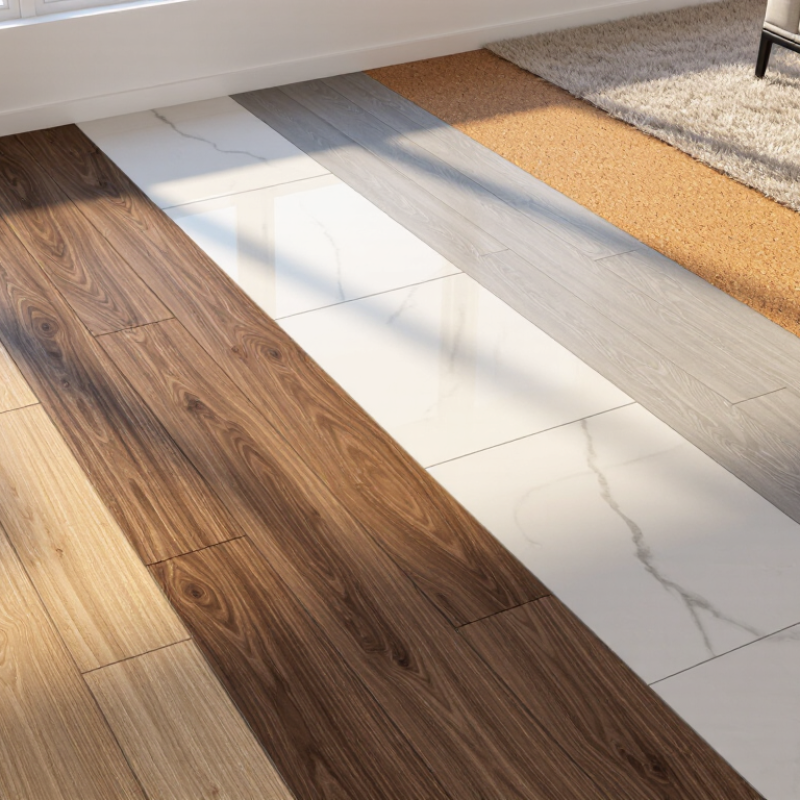
Core Flooring Categories Available in 2026
What Are the Top Down Flooring Types in 2026?
Core Flooring Categories Available in 2026
Flooring choices in 2026 still fall into a few familiar categories. Resilient flooring, including vinyl planks and sheets, handles spills well and feels softer underfoot than tile. It can suit busy kitchens, though the subfloor usually needs to be smooth. Laminate offers wood-like patterns at a lower cost, but standing water can damage many products. Check the care instructions before choosing it for a laundry room.
Engineered wood has a real-wood surface over layered construction, which can make it more stable than solid hardwood in some settings. Solid hardwood can be refinished, but humidity changes may cause movement. Tile and natural stone resist water and wear; they can also feel cold and hard underfoot. Carpet adds warmth and softens footsteps, especially in bedrooms, but needs regular vacuuming and prompt stain care.
Still, details matter. Product construction, installation quality, and room conditions can change how a floor performs. I would not call any category universally best; this comparison is imperfect without knowing the household, subfloor, and maintenance habits. A small sample can help reveal color and texture, but it cannot show how a whole room will feel.
How Hardwood, Engineered Wood, and Laminate Differ
Hardwood is milled from solid wood, so its grain and color vary naturally from plank to plank. It can often be sanded and refinished, but the number of refinishes depends on plank thickness. Moisture is a concern. A damp basement or wet entryway can cause boards to swell or cup. Seasonal humidity can also open small gaps, even in a well-installed floor.
Engineered wood has a real-wood surface bonded to layered cores. This construction usually handles humidity changes better than solid hardwood, though performance depends on its core and veneer thickness. Some products can be refinished; others have too little surface wood. Check the specifications, not just the appearance.
Laminate uses a photographic wood image beneath a clear wear layer, over a compressed-fiber core. It resists everyday scuffs, but it cannot be sanded back to fresh wood. Spills need prompt attention, since water can damage the core. Underfoot, laminate may sound sharper than wood, especially over a hard subfloor. The difference can surprise people.
Choosing between them means weighing repair options, moisture exposure, sound, and the feel of real grain—not just comparing samples under store lighting.
How Tile, Stone, and Concrete Perform
What Are the Top Down Flooring Types in 2026?
Tile, natural stone, and concrete each bring a different kind of durability. Porcelain or ceramic tile handles spills well and offers many finishes, but grout can collect dirt and needs regular cleaning. Stone feels distinctive underfoot. It may need sealing, and its color or texture can vary from piece to piece. Concrete creates a clean, continuous surface and works well with radiant heating. It can feel hard and cool, though, and hairline cracks may appear as the building shifts. No surface is effortless.
Tips: Check the room’s moisture levels and subfloor before choosing. Use a sample at home; daylight can change how colors look. For stone, ask what sealing and ongoing care it needs.
The best fit depends on daily use, not just appearance. In a busy kitchen, tile can make cleanup straightforward, while softer rugs ease standing fatigue. Stone suits spaces where natural variation is welcome, but matching every slab may be unrealistic. Concrete can work in open-plan rooms, provided the slab is properly prepared and sealed. I would not choose from photos alone. A sample can still mislead, but it gives you a better sense of texture and light.
How Vinyl, Linoleum, and Carpet Compare
Vinyl, linoleum, and carpet solve different everyday problems. Vinyl handles splashes well, making it practical near sinks and muddy entryways; its surface also wipes clean quickly. Linoleum is made mainly from natural raw materials and can suit busy rooms, but standing water and neglected seams may cause trouble. Carpet feels warmer underfoot and softens footsteps. It also traps dust until vacuumed, so upkeep matters.
Service life deserves a closer look. The National Association of Home Builders’ Study of Life Expectancy of Home Components estimates about 8–10 years for carpet and roughly 25 years for vinyl and linoleum. These are planning estimates, not promises: traffic, installation, and care can change the outcome, and the study is dated. Still, a hallway with wet shoes may wear carpet faster, while a sunlit room can challenge some vinyl finishes. Small details count. The U.S. Environmental Protection Agency notes that indoor pollutant levels can be two to five times outdoor levels; that figure concerns indoor air generally, not flooring alone. Ask for product-specific emissions information, then weigh comfort, cleaning, and moisture in the actual room.
Choosing Flooring by Room, Budget, and Maintenance Needs
What Are the Top Down Flooring Types in 2026?
Choosing Flooring by Room, Budget, and Maintenance Needs
Room conditions should lead your flooring choice. Porcelain tile handles splashes and frequent cleaning in bathrooms and entryways, but it can feel cold underfoot. For busy family rooms, luxury vinyl plank offers a water-resistant surface and simple upkeep. Engineered wood adds natural warmth to living spaces, while bedroom carpet softens footsteps and cushions bare feet. No floor suits every room.
Budget the installation and the years of care ahead. Houzz’s 2024 U.S. Houzz & Home Study reported a $24,000 median renovation spend in 2023; that figure covers broader home projects, not flooring alone. The 2022 Remodeling Impact Report from the National Association of Realtors and National Association of the Remodeling Industry estimated 118% cost recovery for new wood flooring. That estimate is not a resale guarantee. I’d still price underlayment, subfloor repairs, and transitions before choosing a material; those details are easy to overlook.
Tips: Match maintenance to real habits. Wipe muddy entryways often? Choose a durable, easy-clean surface. Prefer wood? Use protective pads beneath chair legs and check care guidance before using cleaners. Small choices matter. And tile grout may need more attention than the tile itself.
Flooring Costs by Type: 2026 Planning Estimates
Typical installed cost per square foot in the U.S. Estimates vary by location, product quality, and subfloor preparation.
How to choose: Carpet is a comfortable, lower-cost option for bedrooms; luxury vinyl plank suits busy areas where easy cleanup matters; and tile is a durable choice for kitchens and bathrooms. Laminate can offer a wood look on a tighter budget, while engineered hardwood brings a natural wood surface at a higher cost. Check product water-resistance guidance before using any flooring in wet areas.
Bars show the midpoint of each approximate installed-cost range; actual quotes can fall above or below these estimates.
