
7 Tips for Choosing a Cold Plunge Cooling Unit
Choosing the right Cold Plunge Cooling Unit can determine whether your recovery routine feels refreshing or frustrating. Water temperature, cooling speed, noise, energy use, and maintenance all matter in daily operation. A unit that performs well in a showroom may struggle beside a sunny patio or in a warm garage.
This guide examines seven practical considerations before you buy. You will learn how to compare cooling capacity, circulation requirements, filtration, controls, and installation needs. Pay attention to real conditions. A 300-gallon tub needs different support from a compact indoor model. Frequent use also creates more heat, debris, and cleaning work. Small details matter.
Specifications are useful, but they do not tell the whole story. Read the manual carefully, check warranty terms, and confirm service availability in your area. Electrical connections should be handled safely by a qualified professional. Never ignore water hygiene or manufacturer temperature limits. Cold exposure also affects people differently, so medical guidance may be appropriate for those with health concerns.
Some choices are easy to underestimate. A quieter compressor may be worth the higher price, especially near a bedroom. Better insulation can reduce running time, although results vary with weather and tub design. I have found that convenience often matters more than impressive cooling numbers. Still, no system is perfect. Your budget, space, climate, and maintenance habits should shape the final decision. Use these tips to question marketing claims, compare practical performance, and choose equipment you can manage consistently.
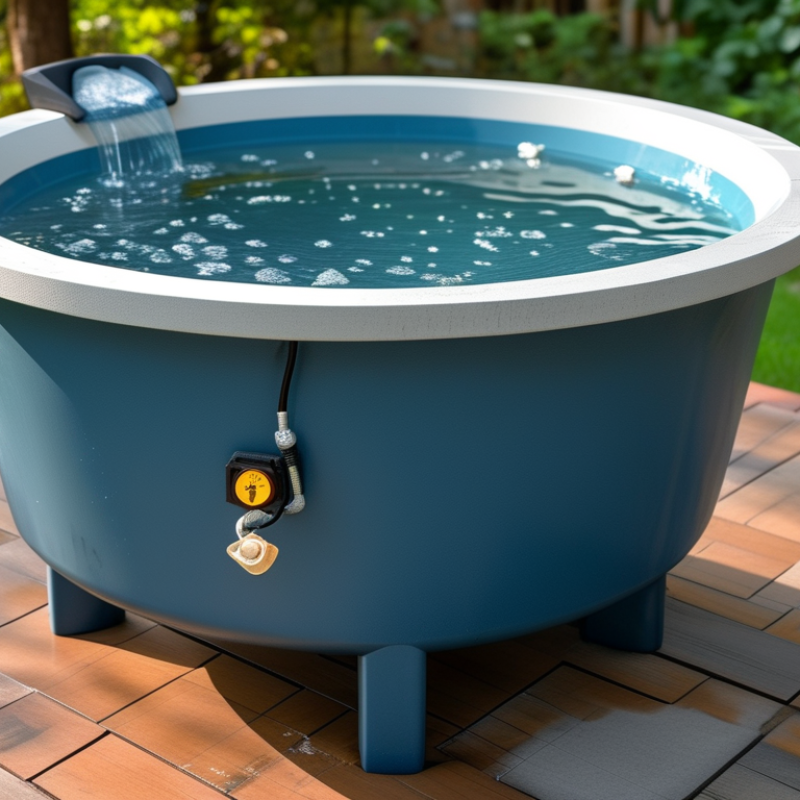
Define Your Cold Plunge Cooling Requirements
7 Tips for Choosing a Cold Plunge Cooling Unit
Define Your Cold Plunge Cooling Requirements
Before comparing cooling units, measure your plunge tub’s actual water volume. Do not rely on advertised capacity alone. A deeper tub may require more cooling power than expected. Record your target temperature, preferred cooling time, and daily usage. For example, cooling 400 liters from 20°C to 10°C within two hours requires different performance than maintaining 12°C overnight. Ambient temperature matters too. A garage at 30°C can challenge a unit designed for an indoor room.
Tip 1: Write down your real routine. Include bath frequency, user count, water changes, and acceptable recovery time. This simple record prevents overbuying or choosing an underpowered system.
Check the unit’s operating range, flow requirements, electrical load, and ventilation needs. Poor airflow can reduce efficiency and shorten service life. The pump must match the plumbing size and water resistance. A technician can verify electrical safety, especially near wet areas. Use suitable protection and follow local installation rules. Do not guess here.
Tip 2: Prioritize stable temperature control over the lowest advertised temperature. Extremely cold water may not suit every user, and rapid cooling is not always necessary. Ask whether the unit can hold a steady setting without large temperature swings.
A common planning mistake is ignoring noise. A cooling unit beside a bedroom may become irritating at night. Maintenance also deserves attention. Confirm how filters, drains, sensors, and water sanitation components are accessed. Keep a small log of water temperature and cleaning dates. It may reveal that your original requirements were incomplete.
Compare Cooling Unit Types and Core Specifications
Choosing a cold plunge cooling unit starts with its operating method, not its advertised temperature. Compressor systems suit frequent use and larger water volumes. Thermoelectric units run quietly, but usually cool more slowly. Ice-assisted systems need less equipment, yet demand regular loading and storage space. The Global Wellness Institute reported a $6.3 trillion wellness economy in 2023, increasing interest in reliable recovery equipment.
Check cooling capacity in kilowatts, not only marketing claims. One kilowatt equals approximately 3,412 BTU per hour. Compare that capacity with tub volume, starting temperature, insulation, and room temperature. AHRI Standard 550/590-2023 emphasizes entering and leaving fluid temperatures, flow rate, and test conditions. Published capacity can change outside those conditions. That detail is easy to miss.
Examine the pump’s flow rate, filtration design, temperature range, power draw, and noise level. A strong pump cannot compensate for weak heat rejection.
Seven practical checks help: match capacity to water volume; verify continuous-duty operation; confirm ambient-temperature limits; inspect electrical protection; measure plumbing connections; check service access; and question unclear efficiency ratings.
COP is useful, but only when test conditions are comparable. ASHRAE’s HVAC Systems and Equipment Handbook explains that condenser performance changes with surrounding air temperature.
Leave ventilation space around air-cooled equipment. I have seen installations fail because the unit sat inside a tight cabinet. That mistake deserves reflection.
Also, do not treat a lower setpoint as proof of better performance. Stable recovery matters more than a dramatic display number.
Check Tub Compatibility, Installation, and Space Needs
A cooling unit must match your tub’s water volume, inlet size, and circulation system. Check these details before comparing cooling capacity or energy use. A unit designed for a small plunge pool may struggle with a larger tub, especially in warm weather. Measure the tub’s internal length, width, and water depth. Then confirm the connection diameter and required pump flow rate. Small differences matter.
Installation space deserves equal attention. Leave enough clearance around the unit for airflow, filter access, and future repairs. A cramped corner can make routine cleaning frustrating and may reduce cooling performance. For indoor setups, check floor strength, drainage, humidity, and electrical requirements. Outdoor installations need weather protection, stable flooring, and safe cable placement. A qualified electrician should verify the power supply before use.
Noise can also affect your experience. Place the unit away from bedrooms, quiet work areas, or thin interior walls. Tub compatibility is more than physical fit. Some systems require separate circulation pumps, while others depend on existing plumbing. Read the technical manual carefully, not only the product dimensions. One easy mistake is ignoring service space. It fits today, but a technician cannot reach the filter tomorrow. Recheck your measurements, because first estimates are often optimistic.
Evaluate Energy Use, Temperature Control, and Noise
7 Tips for Choosing a Cold Plunge Cooling Unit
Energy use deserves close attention. The International Energy Agency reports that space cooling uses nearly 10% of global electricity, with demand expected to more than triple by 2050. A plunge unit is smaller, but poor insulation can still make it work constantly. Check rated watts, daily runtime, standby consumption, and cooling capacity. Calculate expected cost using your local electricity rate. A low purchase price may hide a high operating bill.
Temperature control should be precise, stable, and easy to verify. Look for an adjustable thermostat, a clear display, and independent water-temperature readings. Ask whether performance data comes from controlled testing or marketing estimates. A practical target might be 4–15°C, depending on your protocol and health guidance. The unit should recover quickly after use. It should not swing several degrees overnight. That happens more often than sellers admit. Insulation, cover quality, ambient temperature, and water volume can change results significantly. My own checklist would include testing the water with a calibrated thermometer.
Noise affects whether the unit feels usable at home. Compare sound ratings in dBA, and check the testing method described in ISO 3744 or an equivalent standard. For context, the World Health Organization recommends keeping night noise below 45 dB outdoors. That is not a direct limit for plunge equipment, but it shows why small differences matter. Listen for compressor cycling, vibration, and pump resonance. A quiet rating may exclude startup noise. Ask for real operating measurements, not vague claims.
Assess Maintenance, Safety Features, Warranty, and Cost
Tip: Treat maintenance as a weekly task, not an emergency repair. Check the filter, water level, hose connections, and drain area. A clogged filter can reduce circulation and strain the compressor. I once underestimated this small chore. The water became cloudy within days. Choose a unit with tool-free access and clear cleaning instructions. Replacement filters should be easy to find and reasonably priced.
Tip: Safety deserves more attention than cooling speed. Look for ground-fault protection, automatic shutoff, flow sensors, and an overheat cutoff. A secure cover also helps prevent accidental falls and keeps debris away. Keep electrical connections dry and follow the installation manual carefully. Some advertised safety features may depend on correct grounding. That detail is easy to miss.
Tip: Read the warranty before comparing prices. Confirm coverage for the compressor, pump, controls, labor, and shipping. Check whether poor water chemistry voids protection. Ask how repairs are handled and how long replacement parts remain available. A lower purchase price can hide expensive filters, energy use, or service visits. I would calculate the first year’s operating cost, then add a modest repair reserve. My earlier estimates were too optimistic. Reliability is valuable, but it is never completely free.
7 Tips for Choosing a Cold Plunge Cooling Unit - Assess Maintenance, Safety Features, Warranty, and Cost
| Tip | Evaluation Dimension | What to Look For | Potential Red Flags | Practical Benchmark or Typical Range |
|---|---|---|---|---|
| 1 | Cooling Performance | Select a unit with sufficient cooling capacity for the tub volume, ambient temperature, insulation level, and desired water temperature. | A unit may struggle to maintain cold water when the tub is outdoors, exposed to direct sunlight, or used frequently without adequate insulation. | Target range: approximately 3–15°C (37–59°F) Compare rated cooling capacity, water volume compatibility, and pull-down time rather than relying only on the lowest advertised temperature. |
| 2 | Filtration and Water Treatment | Choose a system with a replaceable filter, accessible filter housing, and clear guidance for cleaning, draining, and sanitizing the water. | Avoid sealed components with no service access, unclear filter specifications, or instructions that do not explain how to prevent microbial growth. | Typical maintenance: weekly inspection Filter cleaning or replacement frequency commonly ranges from every 1–4 weeks, depending on usage, water quality, and the filtration design. |
| 3 | Safety Features | Check for ground-fault protection, over-temperature protection, automatic shutoff, water-flow monitoring, and electrical components rated for wet environments. | Do not use equipment with damaged cords, exposed electrical connections, missing grounding information, or installation instructions that ignore local electrical requirements. | Electrical safety comes first Use a properly grounded circuit and follow local code requirements. A residual-current or ground-fault device is especially important near water. |
| 4 | Energy Consumption | Review the rated power draw, expected duty cycle, insulation requirements, and whether the unit can maintain temperature efficiently after the initial cooling period. | A low purchase price may result in higher operating costs if the unit has poor insulation compatibility or runs continuously to maintain temperature. | Common input range: about 0.5–2.0 kW Actual electricity use varies with tub size, starting water temperature, outdoor conditions, cover quality, and frequency of use. |
| 5 | Noise and Installation | Look for a compact layout, vibration isolation, weather protection where appropriate, and installation requirements that match the available space and plumbing. | Excessive vibration, poor ventilation, short hoses, or insufficient clearance can reduce performance and increase wear on the compressor and pump. | Typical operating noise: approximately 45–65 dB(A) Place the unit on a stable, level surface with adequate airflow and keep vents clear during operation. |
| 6 | Warranty and Serviceability | Verify coverage for the compressor, pump, controls, labor, and replacement parts. Confirm the service process, response time, and exclusions before purchase. | Be cautious of warranties that cover only selected parts, require costly shipping, exclude outdoor use, or provide no clear repair or replacement procedure. | Common warranty range: 1–3 years A longer warranty is useful only when parts, labor, technical support, and claim conditions are clearly documented. |
| 7 | Total Cost of Ownership | Compare the purchase price with installation, electricity, filters, water treatment, replacement hoses, routine maintenance, and possible repair costs. | A unit with a low upfront price may become more expensive if filters are proprietary, replacement parts are unavailable, or energy use is high. | Typical equipment cost: about US$800–US$3,000+ Budget separately for electrical work, insulation or a cover, consumables, and ongoing electricity. Calculate cost over at least three years. |
