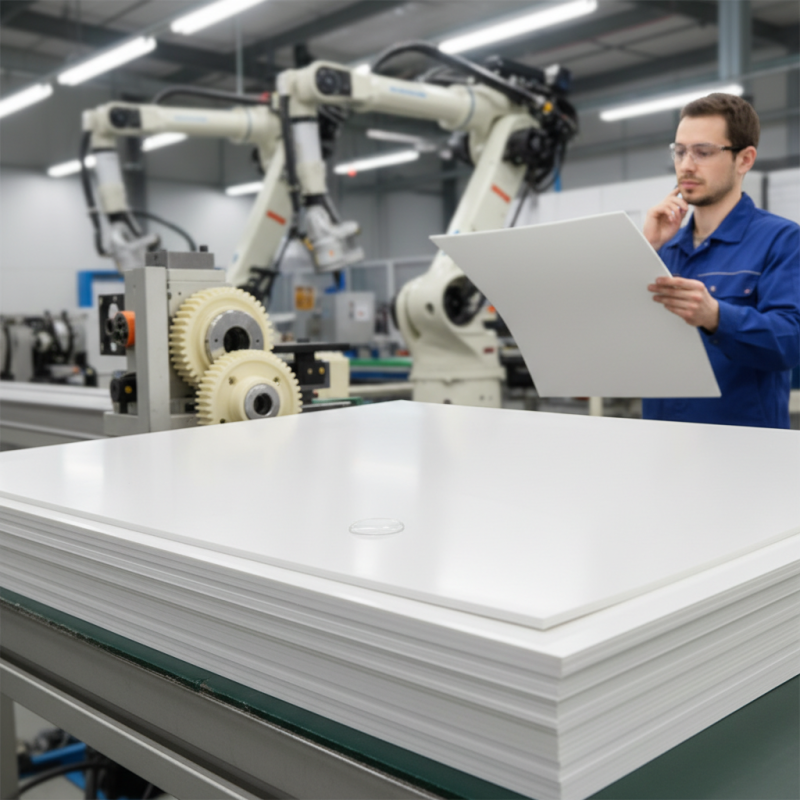
What is Nylon Plastic Sheet and Its Applications in Industry?
Nylon Plastic Sheet is a versatile material widely used across various industries. Its unique properties make it an ideal choice for many applications. Nylon offers high strength, durability, and resistance to wear. These features ensure it remains a reliable option in demanding environments.
In manufacturing, nylon plastic sheets are often used in parts that require precision and toughness. They excel in applications ranging from automotive components to machinery parts. Their resilience under stress is essential for both safety and performance.
However, it's important to consider limitations. For instance, nylon can absorb moisture, which may affect its properties over time. Businesses must carefully evaluate their needs and the specific characteristics of nylon plastic sheets. Understanding both the advantages and drawbacks is crucial for making informed decisions in industrial applications.
What is Nylon Plastic Sheet? Overview and Composition
Nylon plastic sheets are versatile materials used in various industries. At its core, nylon is a synthetic polymer, a member of the polyamide family. It is made by polymerizing caprolactam or other monomers, resulting in a robust, durable substance. The unique composition of nylon gives it impressive mechanical properties. It is resistant to abrasion, chemicals, and heat, making it an ideal choice for demanding applications.
Due to its strength and lightweight nature, nylon plastic sheets find extensive use in automotive components and industrial machinery. They are often employed in manufacturing gears, bearings, and bushings. These applications leverage the material's low friction characteristics, extending the lifespan of moving parts. Additionally, nylon sheets offer excellent machinability, allowing for precise cuts and shapes tailored to specific needs.
Despite its numerous advantages, nylon is not without shortcomings. Its moisture absorption can affect dimensional stability during use. Careful consideration must be given to the environmental conditions in which nylon will operate. Users often reflect on these factors to ensure optimal performance, making the choice of nylon either an asset or a potential challenge in their projects.
Nylon Plastic Sheet Applications in Industry
Key Properties of Nylon Plastic Sheets in Industrial Applications
Nylon plastic sheets are increasingly popular in various industrial applications due to their noteworthy properties. These sheets are known for their excellent durability and flexibility. They can withstand impact and wear, making them suitable for high-stress environments. The resistance to chemicals further enhances their appeal in industries like automotive and aerospace.
The thermal stability of nylon plastic sheets is another key property. They maintain their strength across a broad temperature range. This feature ensures that they perform reliably in both hot and cold conditions. Additionally, these sheets exhibit low friction, which is advantageous in mechanical applications. Components made from nylon can reduce wear, leading to extended equipment life.
Despite these benefits, there are some limitations to consider. Nylon can absorb moisture, which may affect its mechanical properties. This aspect requires careful handling in humid conditions. Manufacturers must assess these factors when choosing materials for specific applications. Ultimately, while nylon plastic sheets offer remarkable advantages, potential drawbacks must also be examined thoroughly.
What is Nylon Plastic Sheet and Its Applications in Industry?
| Property | Description | Applications |
| Durability | Nylon sheets are strong and resistant to wear, making them suitable for rough environments. | Industrial machinery, conveyor systems |
| Chemical Resistance | Resistant to many chemicals, oils, and greases. | Chemical processing equipment, storage tanks |
| Lightweight | Low density compared to metals, which reduces shipping costs. | Transportation industry, automotive components |
| Flexibility | Can be molded into various shapes and sizes. | Custom parts, seals, gaskets |
| Temperature Resistance | Can withstand a wide range of temperatures without losing integrity. | Electrical insulators, automotive applications |
| Electrical Insulation | Good insulative properties, preventing electrical leakage. | Electronics, circuit boards |
Common Applications of Nylon Plastic Sheets in Various Industries
Nylon plastic sheets are versatile materials with various applications in multiple industries. Their durability and strength make them ideal for both industrial and commercial use. In manufacturing, these sheets are often used for machine parts. Their resistance to wear and tear ensures long-lasting performance.
In the automotive industry, nylon sheets serve as an essential component in several applications. They are used in gears, bearings, and bushings due to their low friction properties. This helps improve efficiency and reduces wear on moving parts.
The aerospace sector also utilizes nylon sheets for lightweight structural components. The need for reducing weight while maintaining strength drives innovations in this area.
Nylon sheets find a place in food packaging too. Their excellent barrier properties help keep food fresh for longer periods. However, this application poses challenges, particularly regarding recyclability. Many companies are exploring alternatives that reduce environmental impact. Over time, the industry must reflect on its sustainability practices while continuing to leverage the advantages of nylon.
Market Trends and Demand for Nylon Plastic Sheets in Manufacturing
Nylon plastic sheets have grown significantly in popularity across various industries. Their versatility makes them suitable for applications ranging from automotive components to construction materials. According to a recent industry report, the global nylon sheet market is projected to reach USD 1.2 billion by 2026, reflecting an annual growth rate of 5%. This increasing demand can be attributed to the material's excellent durability and resistance to wear and tear.
Manufacturers are increasingly incorporating nylon sheets into their production processes. The automotive sector is a key driver, utilizing these sheets for interior components and structural parts. Moreover, the food packaging industry is also witnessing a rise in the use of nylon due to its moisture barrier properties. Yet, challenges remain. For instance, the fluctuating prices of raw materials can impact production costs.
The trend also indicates a shift towards eco-friendly alternatives. An estimated 20% of industry players are exploring bio-based nylon solutions to meet sustainability goals. Even so, the adoption hurdles are significant. Technical limitations and consumer awareness are areas needing improvement. Industry stakeholders must reflect on these challenges as they navigate the evolving landscape.
Environmental Impact and Sustainability of Nylon Plastic Sheets
Nylon plastic sheets are widely used in various industries. However, their environmental impact cannot be overlooked. Although durable and versatile, nylon is derived from petroleum. This reliance on fossil fuels raises concerns about sustainability.
Manufacturing nylon emits greenhouse gases. The production process also consumes significant water resources. These factors contribute to environmental degradation. Many companies are reassessing their material choices. They seek alternatives that offer similar performance with less environmental harm.
Recycling nylon presents additional challenges. While it is technically recyclable, the infrastructure for nylon recycling is often limited. This leads to increased waste in landfills. The transition to biodegradable materials is a step forward. However, it remains a work in progress. Industries must focus on developing sustainable practices for both production and disposal.