How to Choose the Best Parking Lift for Your Needs?
Choosing the right Parking Lift can be a daunting task. With so many options on the market, understanding your specific needs is crucial. Expert Mark Thompson, a leading authority in the parking lift industry, states, "A parking lift should fit your operational requirements, not just your space." This insight reminds us that careful consideration is key.
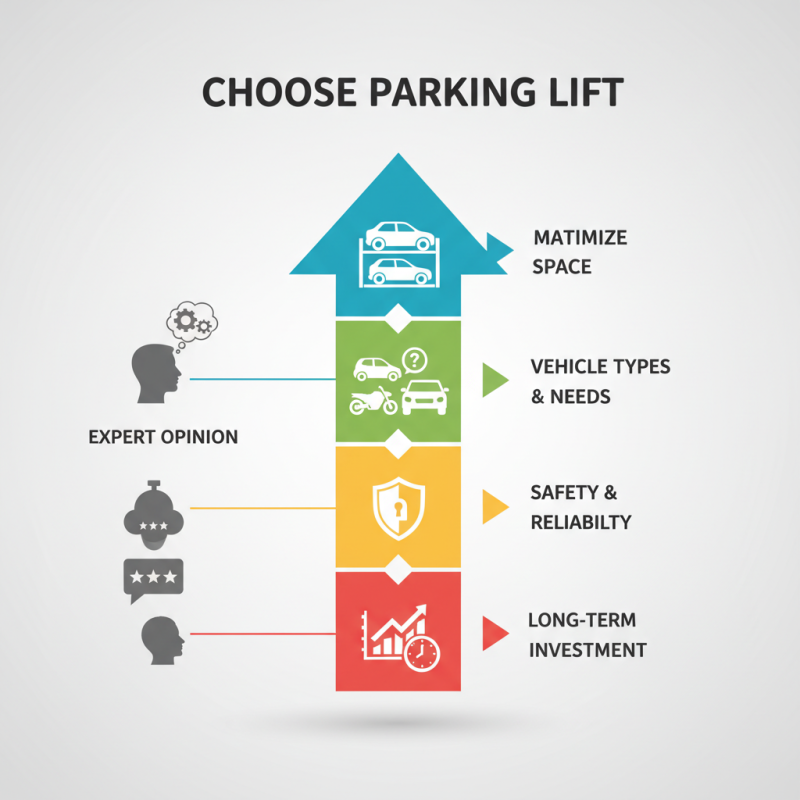
When evaluating a parking lift, think about your available space and vehicle types. Each model offers unique features that cater to various needs. Are you looking for a lift to maximize your garage space or a commercial solution for a busy parking lot? The right choice can make a significant difference in efficiency and usability.
Moreover, it’s essential to consider the lift's safety features. A reliable parking lift should provide peace of mind, ensuring that vehicles are secure. Reflecting on customer reviews and expert opinions can guide your decision. Remember, investing in a quality parking lift is not just about the initial cost; it’s also about long-term satisfaction and reliability.
Understanding Different Types of Parking Lifts Available
When selecting a parking lift, understanding the various types available is crucial. There are four main types: hydraulic lifts, mechanical lifts, scissor lifts, and trolley lifts. Hydraulic lifts are known for their smooth operation and ability to handle heavy loads efficiently. According to industry reports, they can accommodate vehicles weighing up to 10,000 pounds. However, their installation requires more space compared to other types.
Mechanical lifts operate using a system of pulleys and gears. They are often more compact but may have weight limitations. Some models can only support vehicles weighing up to 5,000 pounds. This can be a limitation for those with larger vehicles. Scissor lifts are unique because they provide a steady platform. Yet, they might not be suitable for all parking configurations as they require a clear overhead space.
When looking at trolley lifts, consider their flexibility. They can move cars horizontally and vertically. However, this versatility can make them complex to install, and maintenance can be challenging. A survey from the Parking Association indicates that 40% of parking facility managers report maintenance concerns as a key issue with their lift systems. Each type comes with its advantages and trade-offs, making it essential to align your choice with your specific parking needs.
Factors to Consider When Choosing a Parking Lift
When choosing a parking lift, several key factors must be considered. Space availability is paramount. A compact design suits environments with limited room. According to industry reports, effective space utilization can increase parking efficiency by up to 30%. Think about your vehicle heights too. Some lifts accommodate tall vehicles, while others do not.
Weight capacity is another crucial element. Ensure that the lift can support your heaviest vehicle. Many lifts have limits ranging from 6,000 to 14,000 pounds. Selecting the right load capacity prevents accidents and extends the lift's lifespan. Consider features like hydraulic systems versus mechanical lifts. Hydraulic lifts often provide smoother operation and maintenance ease.
Tips: Look for lifts with adjustable features. These can adapt to various vehicle types. Regular maintenance checks are essential. This can prevent costly repairs down the road. Pay attention to customer reviews and ratings, as they reflect real-user experiences. Feedback from others can guide your choice, revealing strengths and weaknesses in products.
How to Choose the Best Parking Lift for Your Needs?
| Factor | Description | Importance | Example |
| Lift Capacity | The maximum weight the lift can safely hold. | High | Choose based on your vehicle's weight. |
| Lift Type | Different types include scissor, parking stacker, and four-post lifts. | Medium | Scissor lifts are compact, while four-post lifts offer more space. |
| Height Adjustment | The range of height adjustments available for the lift. | Medium | Consider if you need it for SUVs or trucks. |
| Space Requirements | The amount of space needed to operate the lift. | High | Measure garage space before purchase. |
| Safety Features | Includes features like automatic locking mechanisms and emergency stops. | High | Look for lifts with safety certifications. |
| Cost | Total price including installation and warranties. | Medium | Compare prices but consider quality as well. |
| Warranty & Support | The length and terms of the warranty and after-sales support. | Medium | Check for at least a 1-2 year warranty. |
Assessing Your Space and Vehicle Height Requirements
When choosing a parking lift, assessing your space and vehicle height requirements is crucial. Measure the available height in your garage or driveway. Consider any overhead fixtures, like lights or shelves, that may restrict vertical space. An accurate measurement can make a significant difference in determining which lift will fit your setup.
Next, think about your vehicle's height. Different vehicles have varying dimensions, so it's essential to consider the tallest point. Sports cars, SUVs, and trucks all have different clearance needs. Knowing your vehicle's specifications helps in selecting a lift that ensures optimal usage. Ensure the lift accommodates not only the vehicle but also any modifications or accessories you may have.
A common mistake is underestimating the height needed for future vehicles. Many car enthusiasts plan to upgrade their rides. If you anticipate getting a taller vehicle, choose a lift with some extra clearance. It’s wise to leave room for adjustments and growth. Your initial needs may evolve, so planning ahead enhances the lift's value and functionality.
Evaluating Load Capacity and Safety Features of Parking Lifts
When choosing a parking lift, evaluating load capacity is crucial. The lift must hold the weight of the vehicles you plan to store safely. Most lifts have specific weight limits. Exceeding these limits can cause serious accidents. You need to know the average weight of your vehicles. A standard sedan is around 3,000 pounds, while SUVs weigh more. Pay attention to these details.
Safety features are just as important. Look for lifts with automatic locking mechanisms. These can prevent accidental drops. Some models offer safety bars as an additional measure. Visual indicators showing the lift's status can enhance security. Always check reviews for reliability and performance. Users often share their experiences, revealing strengths and weaknesses. Researching carefully can help you avoid costly mistakes.
Don't overlook installation requirements. Improper setup can lead to operational issues. Some lifts demand specific floor types for stability. Consider ongoing maintenance as well. Regular checks ensure your lift functions correctly over time. Even with advanced features, no lift is immune to wear. Balancing reliance on technology with hands-on assessments is essential for safety.
Costs and Maintenance Considerations for Parking Lifts
Choosing the right parking lift involves careful consideration of costs and maintenance. Before making a decision, evaluate your budget thoroughly. Parking lifts can range significantly in price. Higher quality options may have upfront costs, but they often offer long-term savings on repairs.
Maintenance is another critical factor. Regular inspection is essential to ensure safety and efficiency. Routine checks help identify issues before they become costly problems. Depending on the lift type, some may require more frequent service. Users often overlook this aspect, leading to unexpected expenses.
It’s wise to factor in energy consumption as well. Some lifts are more energy-efficient than others. This can affect overall operating costs. Understanding the specific needs of your vehicle is crucial. Do you require a lift for multiple vehicles or just one? These details determine the best choice for you. Calculating potential long-term expenses can reveal the true value of your investment.