How to Choose the Best Stainless Steel Bar Grating for Your Needs?
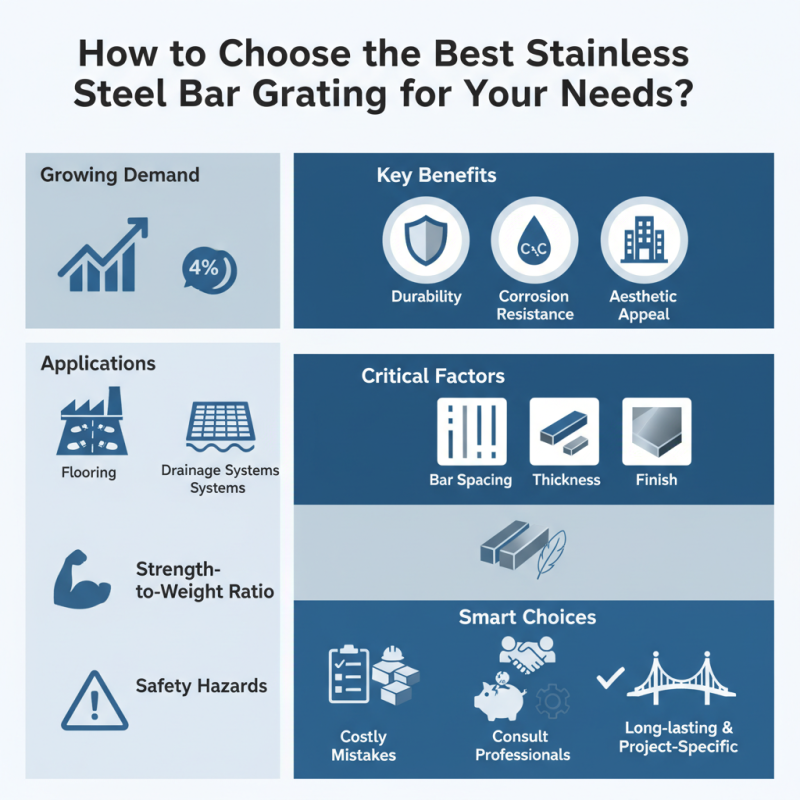
Choosing the right Stainless Steel Bar Grating is essential for various industrial and architectural applications. According to the U.S. Department of Commerce, the demand for stainless steel products is projected to grow by 4% annually. This growth indicates a rising awareness of the benefits that stainless steel grating offers, such as durability, corrosion resistance, and aesthetic appeal.
Stainless Steel Bar Grating has numerous applications, from flooring to drainage systems. Its primary advantage lies in its strength-to-weight ratio, making it ideal for heavy loads. However, not all stainless steel grating is created equal. Factors like bar spacing, thickness, and finish can greatly affect performance and safety. Understanding these elements requires expertise and careful consideration, as even small miscalculations can lead to safety hazards.
Many buyers overlook the importance of compliant materials and local building codes, which can lead to costly mistakes. Selecting inferior products based on price alone can result in premature failure and higher maintenance costs. Consulting with experienced professionals in the industry can provide invaluable insights. This will ensure that the Stainless Steel Bar Grating chosen meets specific project requirements and stands the test of time.
Understanding Stainless Steel Bar Grating: Types and Specifications
When selecting stainless steel bar grating, understanding its types and specifications is crucial. Stainless steel grating comes in various forms, including welded, swage-lock, and fiberglass reinforced options. Each type serves specific purposes. Welded grates are robust and widely used for heavy-duty applications. Swage-lock grating offers lighter designs while maintaining strength, making it ideal for lighter traffic areas.
Specifications such as load capacity and spacing variations matter. Load capacity determines how much weight the grating can support. It’s essential to choose based on anticipated usage. Additionally, different bar spacing impacts safety and drainage. Closer spacing improves safety but may allow less water to pass through.
A common oversight is assuming all grating is the same. Variations in finish, durability, and resistance to corrosion can affect longevity. Some users fail to consider environmental factors that may influence their choice. For instance, marine environments can increase corrosion risk. Always reflect on your specific needs and conditions when choosing grating.
Factors to Consider When Selecting Stainless Steel Bar Grating
Choosing the right stainless steel bar grating involves careful consideration of several factors. First, it's essential to evaluate the load requirements. Whether you're using it for pedestrian walkways or heavy machinery, the grating must support the anticipated weight without bending or breaking. Check the specifications closely.
Another crucial aspect is the type of environment in which the grating will be installed. Will it be exposed to corrosive substances or extreme weather? Stainless steel grades vary in corrosion resistance. For outdoor use, a higher grade might be necessary, which can add to the overall cost. Not all bar gratings are created equal; some offer better durability than others.
The spacing between bars is also key. This impacts safety and functionality. Wider gaps might be more affordable but could pose safety hazards. On the contrary, closely spaced bars provide stability but may require more maintenance. Consider your specific needs with care. Reflect on how these choices affect not just the installation but long-term use and maintenance.
How to Choose the Best Stainless Steel Bar Grating for Your Needs? - Factors to Consider When Selecting Stainless Steel Bar Grating
| Factor | Description | Importance Level |
| Material Grade | Select a grade based on resistance to corrosion and strength. | High |
| Load Rating | Determine the maximum load the grating will bear to ensure safety and durability. | High |
| Bar Spacing | Choose bar spacing that aligns with application requirements (foot traffic, equipment, etc.). | Medium |
| Thickness | Thicker bars generally increase strength but may add weight; choose based on application. | Medium |
| Finish Type | Select a finish that matches aesthetic needs and enhances corrosion resistance. | Low |
| Installation Method | Consider the installation environment and accessibility for maintenance. | Medium |
| Customization Options | Check for options to customize dimensions or features based on specific needs. | Low |
Assessing Load Requirements for Your Stainless Steel Grating Needs
When selecting stainless steel bar grating, evaluating load requirements is crucial. Different applications demand varying load capacities. This means understanding the specific environment where the grating will be used. For instance, heavy machinery areas will need a higher load capacity than pedestrian walkways.
Tips: Calculate the maximum weight your grating will need to support. Consider both static and dynamic loads. If your grating will experience frequent movement or impacts, err on the side of caution.
Additionally, take into account the spacing of the bars. Wider spacing can reduce the overall strength of the grating. It’s essential to balance between weight capacity and material savings. You might find yourself torn between cost and safety.
Tips: Use a reliable calculator to determine load ratings based on your grating dimensions. If in doubt, consult an expert. Investing time in this assessment can prevent future replacements or safety issues.
Evaluating Durability and Corrosion Resistance in Stainless Steel Grating
When selecting stainless steel bar grating, the focus on durability and corrosion resistance is crucial. Stainless steel is known for its ability to withstand harsh environments. However, not all stainless steel is created equal. Different grades exhibit varying levels of corrosion resistance, which can impact their longevity in specific applications. For instance, a higher nickel content often enhances durability. This choice is significant for industries that expose their grating to moisture or chemicals.
Moreover, environmental factors play a major role in corrosion. Areas with high humidity or saltwater can accelerate the deterioration process. It’s essential to assess how your grating will be used. For example, grating in a coastal area may require special attention to ensure it lasts. Consider conducting tests or seeking expert opinions on the best options for your setting. Reflecting on these details can guide you in making an informed choice.
Choosing the right grating involves more than just price. The long-term cost may increase if the material fails prematurely. Investing in quality materials upfront can offer peace of mind. Regular maintenance and inspections can help identify rust or wear before it becomes a bigger issue. Ultimately, understanding the environment and intended use of your grating can lead to a more successful selection.
Maintenance Tips to Ensure Longevity of Stainless Steel Bar Grating
To ensure the longevity of stainless steel bar grating, regular maintenance is essential. Start with a simple cleaning routine. Use a soft brush and mild detergent to remove dirt and debris. For tougher stains, a stainless steel cleaner can help restore its shine. Be gentle to avoid scratches, which can weaken the material over time.
Inspecting the grating periodically is also crucial. Look for signs of corrosion or wear, especially in high-traffic areas. If you notice any damage, address it promptly. Sometimes, replacing a few bars can save the entire installation. Always make sure the grating is securely fastened to avoid accidents. A loose grate can cause serious safety hazards.
Remember that environmental factors play a role too. Areas with high salt exposure, like coastal regions, may require more frequent maintenance. Keep an eye on humidity levels, as they can lead to rust if not managed properly. With attention and care, your stainless steel bar grating can last for years, serving its purpose effectively.