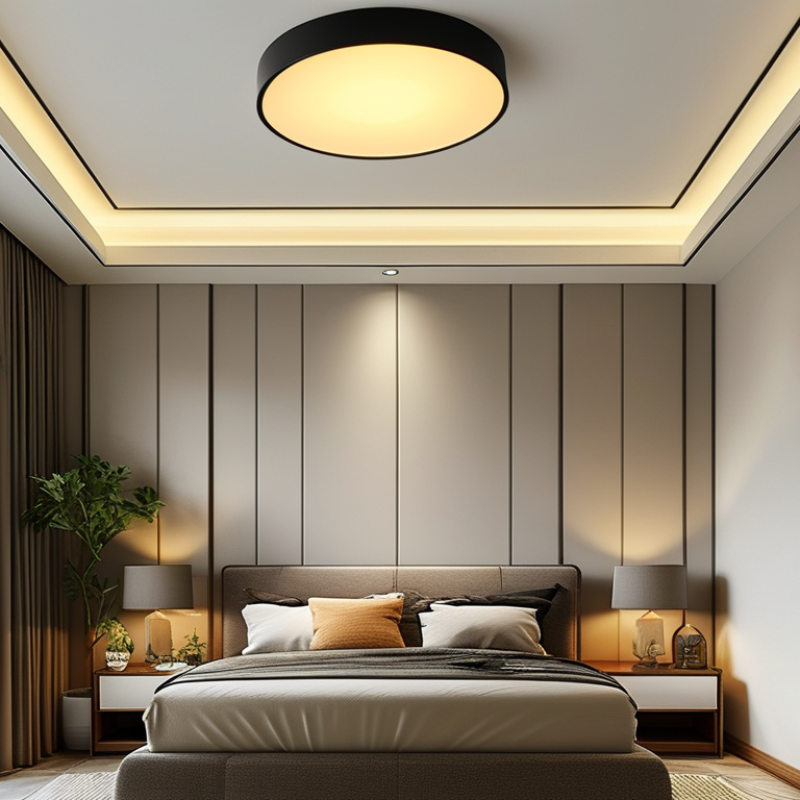
2026 Best Surface Mounted Light Buying Guide?
Choosing the right Surface Mounted Light in 2026 involves more than comparing prices and brightness claims. A reliable fixture should suit the room, ceiling structure, wiring conditions, and daily habits. This guide examines practical factors, including beam angle, color temperature, lumen output, dimming compatibility, heat management, and installation depth. These details matter in real homes, not only in product photographs.
Experience shows that a slim light can look elegant above a dining table, yet perform poorly in a room with a high ceiling. A 3,000K warm-white model may create a comfortable bedroom, while a 4,000K neutral-white fixture often supports clearer kitchen tasks. Look closely at the diffuser, too. Thin plastic may yellow over time, although some affordable models remain surprisingly durable. Product reviews help, but verified specifications and dependable manufacturer support deserve equal attention.
Safety should remain part of the purchase decision. Check electrical ratings, installation instructions, certification marks, and compatibility with your local supply voltage. When ceiling wiring is uncertain, use a qualified electrician rather than guessing. Small mistakes can become expensive.
Not every recommendation will suit every space.
This 2026 buying guide compares common designs, realistic performance, maintenance needs, and long-term value. It also questions popular assumptions, such as whether higher wattage always means better lighting. It does not. A carefully selected Surface Mounted Light should provide comfortable illumination, stable performance, and a finish that still looks appropriate years later. Think beyond the first evening.
What Is a Surface Mounted Light and How Does It Work?
A surface mounted light is a fixture attached directly to a ceiling or wall. It does not sit inside a hollow opening like a recessed light. This design works well where ceiling space is limited, such as concrete rooms, low ceilings, and renovated apartments. The housing usually contains an LED board, a heat sink, a driver, and a diffuser. The diffuser spreads light across the room and reduces harsh glare.
Here is how it works. Household electricity enters the driver, which changes and controls the power for the LEDs. The LED board produces light, while the heat sink carries heat away from the electronic parts. A wall switch, sensor, or compatible dimmer then controls the fixture. During installation, the mounting bracket is fixed first, wires are connected, and the light body is secured over the bracket. Turn off the circuit breaker. Never rely only on the wall switch.
Buying decisions should match the room. Check the lumen output for brightness, the color temperature for mood, and the color rendering index for accurate colors. Bathrooms and outdoor areas may need suitable moisture protection. A metal housing often manages heat better, but it can increase weight. I would not judge quality by appearance alone. A thin diffuser may look elegant yet create uneven light. Wiring conditions, ceiling strength, and dimmer compatibility also deserve careful inspection. When uncertain, use a qualified electrician rather than guessing.
Which Surface Mounted Light Types and Features Fit Your Space?
Choosing a surface mounted light starts with the room, not the fixture. Flush mounts suit low ceilings because their shallow profiles reduce bumps and visual clutter. Semi-flush models work better where the ceiling is higher and a decorative drop feels appropriate. For kitchens, workshops, and home offices, slim LED panels spread light evenly across large surfaces. They can feel less warm, though.
Check the light output before judging appearance. A bedroom may need softer illumination, while a kitchen benefits from stronger, shadow-reducing light. Select a warm color temperature for bedrooms and living rooms. Neutral white often suits kitchens, bathrooms, and work areas. A high color rendering index helps fabrics, food, and skin look more natural. It is a small detail.
Dimming is valuable when one room serves several purposes. Confirm that the fixture and dimmer are compatible. In bathrooms or covered outdoor areas, choose a suitable damp-location rating. Look for sealed edges where dust and moisture may collect. Frosted diffusers can reduce glare, but some inexpensive designs turn yellow or create uneven patches over time. I still get this wrong sometimes. A bright fixture is not always a comfortable one. Measure the ceiling box, check installation clearance, and consider maintenance access before buying. Twitter
How to Choose the Right Size, Brightness, Color, and Beam Angle
Choosing a surface-mounted light starts with the room, not the fixture. For general office tasks, the Illuminating Engineering Society recommends roughly 300–500 lux. A 10-square-meter room therefore needs about 3,000–5,000 lumens before losses from lenses, dirt, and dark surfaces. The U.S. Department of Energy’s Solid-State Lighting R&D Plan also shows why efficacy matters: many modern LED systems exceed 100 lumens per watt.
Size should follow ceiling height and viewing distance. A compact 200–300 mm fitting may suit a hallway, while a larger room often needs several fixtures instead of one oversized disk. I once chose by diameter alone. That was a mistake. Light distribution mattered more.
For beam angle, use this simple check: coverage diameter equals twice the mounting height multiplied by the tangent of half the beam angle. At 2.5 meters, a 60-degree beam covers about 2.9 meters.
Wider beams soften shadows; narrower beams create stronger accents.
Color temperature changes the room’s character. Around 2700–3000K feels warmer for bedrooms and hospitality spaces. Around 3500–4000K usually supports kitchens, offices, and workshops.
The International Commission on Illumination advises evaluating color rendering, not temperature alone. Choose CRI 80 or higher for ordinary interiors, and consider CRI 90 or higher for artwork, retail displays, or detailed tasks. Check glare ratings, dimming behavior, and measured lumens. Product labels can simplify reality too much.
What Materials, Safety Ratings, and Controls Should You Compare?
2026 Best Surface Mounted Light Buying Guide: What Materials, Safety Ratings, and Controls Should You Compare?
A surface-mounted light should manage heat, impact, and moisture without looking industrial. Aluminum housings usually transfer heat better than thin steel. Polycarbonate diffusers resist breaking, while glass offers better scratch resistance but adds weight. Check the driver’s operating temperature, not only the fixture material. The U.S. Department of Energy’s Solid-State Lighting R&D Opportunities report links thermal management with LED lifetime and performance stability. Heat remains easy to underestimate.
Safety ratings need careful matching. An IP44 rating may suit dry interiors, but damp rooms often require stronger water protection. Outdoor locations need a rating based on direct exposure, dust, and drainage. Verify recognized electrical safety certification and installation instructions. Do not treat an IP number as proof of fire safety. Ceiling construction, insulation contact, and emergency access can change the risk. Local requirements still control.
Controls affect comfort and operating cost. The International Energy Agency reports that lighting uses about 15% of global electricity, so avoid buying controls as decoration. Compare manual dimming, 0–10 V, digital protocols, occupancy sensors, and daylight response. Ask for flicker measurements, dimming range, and minimum load compatibility. A light that dims unevenly becomes annoying quickly. I prefer testing a sample at low brightness before ordering many units. That habit is imperfect, but catalog claims can miss real installation behavior.
2026 Best Surface Mounted Light Buying Guide? - What Materials, Safety Ratings, and Controls Should You Compare?
| Light Configuration | Typical Body and Diffuser Materials | Typical Output and Efficiency | Color and Optical Performance | Recommended Safety Ratings | Typical Control Options | Best-Fit Applications | Key Buying Checks |
|---|---|---|---|---|---|---|---|
| Basic Indoor LED Surface Light | Powder-coated steel Polycarbonate diffuser Steel provides a rigid mounting base, while polycarbonate offers good impact resistance and even light diffusion. | Typically 800–3,000 lumens Approximately 90–130 lumens per watt Common sizes: 300–600 mm diameter or length | 2,700–4,000 K CRI 80 or higher Opal diffuser for low-glare general lighting | Dry-location rating for ordinary interiors IP20 is common where there is no water exposure Class I or Class II electrical construction, depending on the design | On/off switching Phase-cut dimming when the driver is specifically compatible | Bedrooms, living rooms, corridors, retail areas, and general commercial interiors | Check ceiling compatibility, driver replacement access, diffuser yellowing resistance, and whether the dimmer is listed for the fixture. |
| Bathroom and Moisture-Resistant Surface Light | Aluminum housing Sealed polycarbonate lens Silicone gasket Aluminum helps dissipate heat; gaskets reduce the chance of moisture entering the enclosure. | Typically 1,000–3,500 lumens Approximately 85–120 lumens per watt Sealed construction may slightly reduce optical efficiency | 3,000–4,000 K CRI 80 or higher Wide beam distribution for uniform facial and room illumination | IP44 or higher for splash-prone areas IP65 may be appropriate where water jets or heavy spray are possible Use only within the manufacturer’s stated zone and installation position | Wall switch Phase-cut dimming with a compatible driver Occupancy or humidity sensor through a suitable control system | Bathrooms, laundry rooms, utility rooms, covered entrances, and damp corridors | Confirm the IP rating applies to the complete installed fixture, not only the housing. Inspect gasket compression and cable-entry sealing. |
| High-Impact Utility Surface Light | Die-cast aluminum Polycarbonate lens Stainless-steel hardware Polycarbonate is generally more impact-resistant than glass and is suitable for demanding utility spaces. | Typically 2,000–8,000 lumens Approximately 100–150 lumens per watt Often available in linear or round formats | 4,000–5,000 K CRI 80 or higher Clear or prismatic lens for increased task visibility | IP65 or higher for dusty or wash-down environments IK08 or higher where impact resistance is required Select a temperature rating suitable for the installation area | On/off switching 0–10 V dimming Microwave or passive-infrared occupancy sensing | Workshops, garages, storage areas, service rooms, and industrial corridors | Compare impact classification, operating temperature range, mounting strength, lens replacement availability, and ingress protection after installation. |
| Low-Glare Office Surface Panel | Aluminum frame Acrylic microprismatic diffuser Steel backplate Microprismatic optics can control high-angle brightness more effectively than a basic opal diffuser. | Typically 2,500–5,000 lumens Approximately 90–125 lumens per watt Broad, evenly distributed light | 3,000–4,000 K CRI 80 or higher Low-glare optical design; verify the manufacturer’s glare data for the intended ceiling height | IP20 is generally sufficient for dry offices Flicker performance should be checked for visual comfort and camera use Use a suitable fire-rated ceiling fixing where required by local regulations | 0–10 V dimming Digital addressable lighting control Daylight and occupancy sensors | Offices, classrooms, libraries, meeting rooms, and computer work areas | Compare glare rating, flicker percentage, dimming range, standby power, acoustic performance, and compatibility with the building control system. |
| High-Color-Rendering Display Light | Extruded aluminum Optical-grade acrylic or glass Thermal interface material A robust thermal path helps preserve LED performance and color stability over time. | Typically 1,500–4,500 lumens Approximately 70–110 lumens per watt Higher color quality can reduce total efficacy | 2,700–4,000 K CRI 90 or higher Consider R9 performance for red tones and color-sensitive merchandise | Dry-location rating unless a sealed version is specified UV-resistant diffuser for areas exposed to sunlight Verify photobiological safety information when used close to people | On/off switching Phase-cut dimming 0–10 V or digital addressable dimming | Galleries, boutiques, salons, hospitality areas, and product display zones | Request full color data, including R9, color consistency, lumen maintenance, diffuser transmission, and the effect of dimming on color quality. |
| Tunable-White Surface Light | Aluminum heat sink Polycarbonate or acrylic diffuser Steel mounting plate The housing should provide sufficient thermal management across the full color-temperature range. | Typically 1,500–5,000 lumens Approximately 70–115 lumens per watt Maximum output may vary by selected color temperature | Commonly adjustable from approximately 2,700–6,500 K CRI 80 or higher; higher-quality versions may offer CRI 90 Useful for scene setting and daylight-oriented operation | IP20 for dry interiors unless a sealed model is specified Check electromagnetic compatibility and radio-frequency requirements Confirm safe operation at the selected dimming level | Wireless control Digital addressable lighting control 0–10 V with a compatible tunable-white driver Wall-mounted scene controller | Hospitality, healthcare, education, residential interiors, and multipurpose rooms | Compare control protocol, commissioning method, minimum dimming level, network security, power consumption at standby, and manual override options. |
| Emergency-Compatible Surface Light | Steel or aluminum body Polycarbonate diffuser Rechargeable battery enclosure Battery ventilation, thermal separation, and service access are important for long-term reliability. | Normal operation commonly ranges from 1,000–4,000 lumens Emergency output depends on the battery and emergency driver Emergency duration is commonly 1–3 hours, subject to local requirements | Usually 3,000–4,000 K CRI 80 or higher Emergency illumination must be designed for the required escape-route or open-area coverage | Use a certified emergency-lighting design suitable for the jurisdiction Check battery temperature rating and automatic test functionality Maintain required clearance around the battery and driver | Maintained or non-maintained emergency operation Central monitoring where supported Automatic self-test and status indication | Escape routes, public buildings, apartments, offices, and commercial premises | Verify emergency duration, rated emergency lumens, battery replacement interval, test records, charge time, and the distinction between maintained and non-maintained operation. |
| Exterior Canopy and Covered-Outdoor Light | Powder-coated die-cast aluminum UV-stabilized polycarbonate lens Stainless-steel fasteners UV-resistant materials and corrosion-resistant hardware are important for outdoor durability. | Typically 2,000–10,000 lumens Approximately 90–140 lumens per watt Output should be selected according to mounting height and target illuminance | 3,000–5,000 K CRI 70 or higher for general outdoor utility lighting Symmetric or asymmetric optics depending on the area layout | IP65 or higher for exposed installations IK08 or higher where vandalism or accidental impact is possible Corrosion resistance should match the local climate and salt exposure | Photocell control Passive-infrared occupancy sensing 0–10 V dimming Wireless scheduling or networked control | Parking structures, loading bays, covered walkways, service yards, and exterior entrances | Check surge protection, ambient-temperature range, corrosion testing, condensation management, photocell placement, and maintenance access. |

How to Install, Maintain, and Replace a Surface Mounted Light Safely
A surface-mounted light looks simple, yet installation can expose hidden electrical risks. NFPA’s Home Structure Fires analysis reports that electrical distribution and lighting equipment appears in about 24% of home structure fires. Turn off the circuit breaker before removing the fixture. Do not trust a wall switch alone. Use a voltage tester on every conductor, then confirm the tester works again. If wires are brittle, scorched, or confusing, stop and contact a qualified electrician.
During installation, confirm the ceiling box can support the fixture’s weight. Secure the mounting plate firmly, connect the grounding conductor, and cap each wire with an approved connector. OSHA ladder guidance recommends maintaining three points of contact. Keep both feet below the highest safe standing level. I once treated a loose mounting screw as cosmetic. It was not. A vibrating fixture can damage connections over time.
For maintenance, isolate power before cleaning dust from vents, lenses, and the driver area. Check for buzzing, flickering, heat marks, or a sagging cover. The U.S. Department of Energy states that LED lighting uses at least 75% less energy and can last up to 25 times longer than incandescent lighting, but drivers still fail. When replacing the unit, photograph the wiring first, match the voltage and box rating, and inspect the ceiling for moisture. Recheck every connection before restoring power. Small errors deserve attention.