2026 Best Desk Chair Types for Global Buyers?
Choosing the best desk chair for global buyers in 2026 requires more than comparing prices, colors, and fashionable features. A chair that feels supportive in a showroom may become uncomfortable after six hours of spreadsheets, video calls, and repeated posture changes. The right choice depends on body dimensions, working habits, climate, floor type, warranty support, and local repair access.
Industry research reinforces this practical view. The World Health Organization’s Guidelines on Physical Activity and Sedentary Behaviour recommend reducing prolonged sitting and increasing movement throughout the day. A desk chair cannot solve inactivity alone. It should encourage stable support while allowing users to stand, stretch, and change position. The Gensler Research Institute’s 2024 Global Workplace Survey also highlights the importance of workplace choice, comfort, and control for employee experience. That finding matters for buyers managing hybrid teams across different regions.
Standards matter, too. ANSI/BIFMA performance standards provide useful benchmarks for durability, stability, and chair safety, although certification does not guarantee personal comfort. Neither does a high price. Sometimes, a simpler chair with adjustable lumbar support and breathable fabric performs better in a hot office than a heavily padded executive model.
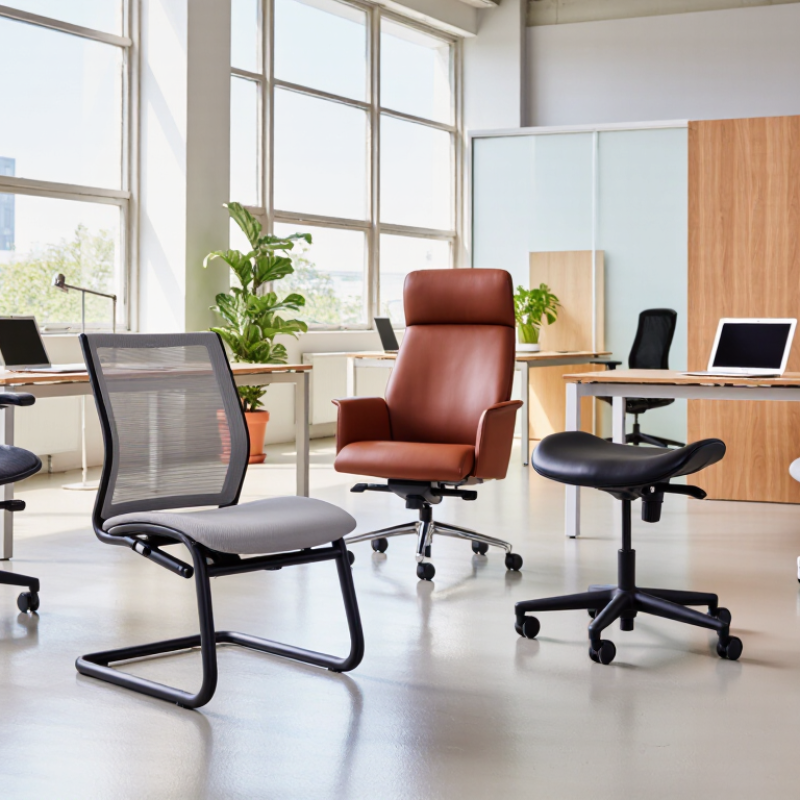
This guide compares ergonomic task chairs, mesh chairs, executive chairs, kneeling chairs, saddle chairs, and compact options. It examines adjustment ranges, materials, maintenance, sustainability claims, and value for international purchasing. There is no universally perfect model. That limitation deserves attention. The best desk chair is the one that fits the user, the workspace, and the working day.
What Defines a Desk Chair Type in 2026?
A desk chair type is defined by use, adjustment, and body support, not by appearance alone. In 2026, global buyers should ask how the chair performs during eight-hour workdays. A compact task chair suits focused computer work and smaller rooms. A drafting chair serves raised desks, while a conference chair supports shorter sessions. These categories overlap. That creates confusion.
The U.S. Bureau of Labor Statistics reported that 27.5% of employed people worked from home on days worked in 2024. This figure supports a practical shift toward chairs for mixed home and office environments.
A modern type should offer seat-height adjustment, controlled recline, lumbar support, and a stable five-point base. ANSI/BIFMA G1 guidance also emphasizes fit and adjustability rather than decorative form.
A chair that looks ergonomic may still leave feet unsupported or shoulders lifted.
EU-OSHA’s 2022 OSH Pulse survey found that about 30% of workers reported backache. That statistic makes seat depth and lower-back contact important buying checks.
Sit with both feet flat. Leave a small gap behind the knees. Test the armrests beside the desk, not in a showroom pose.
I have seen buyers overvalue thick padding. It can feel luxurious for ten minutes, then restrict movement.
No checklist is perfect. Climate, clothing, desk height, and local body dimensions change the result. The best 2026 chair type is therefore a measurable fit, not a universal label.
How to Compare Ergonomic, Executive, Task, and Gaming Chairs
For global buyers, a desk chair should match daily work, body size, and local climate. An ergonomic chair usually offers adjustable lumbar support, seat depth, armrests, and recline tension. These controls help when spreadsheets fill the screen for six hours. A task chair is simpler, lighter, and often easier to move between rooms. It suits focused work, but cheaper models may lack stable padding. Small detail matters.
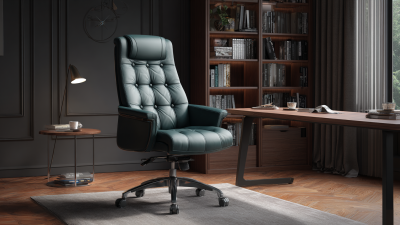
Executive chairs use wider seats, taller backs, and softer materials for a formal office feel. They look substantial, yet thick cushioning can trap heat in humid regions. Gaming chairs often provide strong side bolsters and a high back. Those features support long sessions, but they may restrict relaxed posture. Compare the actual seat width, foam response, base strength, and adjustment range. Do not trust appearance alone. From practical testing, a chair that fits your desk height often beats a more expensive model. I have also found that “adjustable” does not always mean intuitive. That is worth questioning.
Tips: Measure the user’s hip width and desk height before ordering. Check shipping dimensions, return terms, assembly instructions, and replacement-part support. Test the chair for pressure behind the knees after thirty minutes. For shared offices, choose durable upholstery and controls that new users can understand quickly. A footrest may solve a height mismatch better than raising the chair too far.
2026 Best Desk Chair Types for Global Buyers? - How to Compare Ergonomic, Executive, Task, and Gaming Chairs
| Comparison Dimension | Ergonomic Chair | Executive Chair | Task Chair | Gaming Chair |
|---|---|---|---|---|
| Best For | Long working sessions, posture support, and adjustable workstations. Suitable for office professionals, home workers, and users with specific ergonomic needs. |
Private offices, management spaces, and users who prefer a substantial, formal appearance. Often selected for comfort and visual presence rather than maximum adjustability. |
Shared offices, reception areas, study spaces, and general computer work. A practical choice where simplicity, compact sizing, and cost control matter. |
Computer gaming, streaming, and users who prefer a high-back, supportive seat. Useful for mixed gaming and desk activities when the design suits the room. |
| Typical Daily Use | 6–10 hours when correctly adjusted and paired with a suitable desk height. | 4–8 hours, depending on lumbar support, seat depth, cushioning, and adjustability. | 3–8 hours; advanced models can support longer use than basic models. | 4–10 hours, provided the seat shape, recline angle, and lumbar support fit the user. |
| Backrest Design | Contoured backrest commonly shaped to support the lumbar and upper back; may include a flexible or breathable back. | Usually tall and wide with thick padding and a broad shoulder area; may restrict movement more than a flexible ergonomic back. | Medium-height or full-height backrest with a straightforward shape; support quality varies widely by model. | Typically tall, often with an integrated headrest area and pronounced side bolsters inspired by vehicle seats. |
| Lumbar Support | Usually adjustable in height, depth, firmness, or tension; advanced designs may use a dynamic lumbar mechanism. | May be built into the cushion or provided by an adjustable pad; fixed support is common in traditional designs. | Often fixed or height-adjustable; basic models may provide only a shaped backrest without separate lumbar adjustment. | Commonly supplied as a removable lumbar cushion or adjustable support pad; built-in systems are also available. |
| Head and Neck Support | Usually optional or integrated with a height-adjustable headrest; many work-focused users prefer freedom of movement. | High backrest may support the shoulders and upper back; a separate headrest is not always included. | Headrests are uncommon, helping keep the chair compact and suitable for shared work areas. | Headrest pillows or integrated head-support sections are common, especially for reclining and media use. |
| Armrest Adjustment | Often 2D, 3D, or 4D: height, width, depth, pivot, and sometimes angle can be adjusted. | Frequently fixed, height-adjustable, or padded flip-up; extensive adjustment is less common in formal designs. | Usually fixed or height-adjustable; suitable for basic keyboard and mouse positioning. | Often height-adjustable, with some models offering width, depth, pivot, and angle adjustment. |
| Seat Adjustment | Commonly includes seat height, seat depth, tilt angle, tilt tension, and a lockable recline mechanism. | Usually includes height and recline adjustment; seat-depth adjustment is less common. | Normally includes height and tilt adjustment; seat-depth and tension controls depend on the model. | Usually includes height, recline, rocking or tilt tension, and a wide reclining range. |
| Typical Recline Range | Approximately 95°–135°, designed for focused work and occasional relaxation. | Approximately 90°–135°; some models recline farther for rest or reading. | Approximately 90°–120°, prioritizing upright work posture. | Approximately 90°–180°; very deep recline is common, but it is not necessary for desk work. |
| Seat Width | Typically about 46–52 cm, with wider options available for different body sizes. | Typically about 50–58 cm, often using wider cushions and larger armrests. | Typically about 44–50 cm, making it suitable for compact workstations and shared spaces. | Typically about 47–56 cm between the outer seat edges, although side bolsters may reduce usable space. |
| Seat Height Range | Commonly about 42–55 cm from floor to seat surface; check the desk height and user leg length. | Commonly about 44–56 cm, with some large-frame designs starting higher. | Commonly about 40–52 cm, suitable for standard desks and shorter users in many cases. | Commonly about 44–56 cm; some models may be too tall for users with shorter legs. |
| Common Materials | Breathable mesh, molded foam, fabric, or mixed-material construction. | Leather, synthetic leather, bonded upholstery, fabric, molded foam, and wood or metal accents. | Mesh, fabric, molded foam, plastic, and coated metal components. | PU-coated synthetic leather, PVC, fabric, mesh panels, dense foam, plastic, and metal components. |
| Breathability | Usually high when the backrest and seat use mesh or ventilated fabric; foam seats can retain more heat. | Usually moderate to low with thick upholstery or synthetic leather, especially in warm climates. | Moderate to high when mesh is used; depends strongly on seat padding and local climate. | Low to moderate for synthetic leather; fabric and mesh versions generally provide better airflow. |
| Typical Weight Capacity | About 100–150 kg, depending on the frame, base, gas lift, and testing standard. | About 120–180 kg; heavy-duty options may support more, but dimensions must also be checked. | About 90–140 kg, with heavy-duty versions available for higher loads. | About 100–180 kg; published capacity should be verified because testing methods vary by market. |
| Approximate Product Weight | About 12–25 kg, depending on the adjustment mechanism and base construction. | About 18–35 kg because of wider frames, dense padding, and heavier upholstery. | About 8–18 kg, making many task chairs easier to move or install. | About 18–30 kg, especially when a wide metal frame and reclining mechanism are used. |
| Space Requirement | Medium; allow enough clearance for recline, arm movement, and seat-depth adjustment. | Large; broad armrests, deep cushions, and a wide footprint may require more floor space. | Small to medium; generally easier to fit into compact desks and shared workstations. | Medium to large; side bolsters and a broad five-star base can require additional clearance. |
| Mobility and Base | Five-star base with casters; soft casters may be preferable for hard floors and protective mats for delicate flooring. | Usually a robust five-star base with casters; larger wheels may improve movement over rugs. | Lightweight five-star base with standard casters; suitable for frequent repositioning. | Usually a wide five-star base with casters designed for stability during reclining and movement. |
| Assembly Difficulty | Moderate; more adjustment parts and mechanisms may increase installation time. | Moderate to high because of the heavier frame and larger upholstered components. | Low to moderate; fewer controls generally make assembly simpler. | Moderate; the backrest, side covers, armrests, and reclining mechanism may require careful alignment. |
| Maintenance Needs | Clean mesh and upholstery regularly; inspect adjustment mechanisms, casters, and gas lift. | Wipe upholstery according to the material instructions; protect synthetic leather from excessive heat and sunlight. | Generally simple; vacuum fabric or mesh and periodically tighten fasteners and inspect casters. | Clean upholstery, pillows, and crevices regularly; synthetic leather requires protection against cracking and peeling. |
| Common Strengths | High adjustability, better support customization, flexible movement, and suitability for long work periods. | Premium appearance, generous padding, broad seating, and a formal executive aesthetic. | Practical pricing, compact design, easy movement, and straightforward operation. | High backrest, deep recline, strong visual styling, and useful support for gaming or media sessions. |
| Common Limitations | Can be more expensive and may require careful adjustment; mesh tension and seat shape are personal preferences. | Can be heavy, less breathable, and less adjustable; oversized dimensions may not suit smaller users. | Basic models may lack seat-depth adjustment, advanced lumbar support, and long-session comfort. | Side bolsters may restrict leg movement, synthetic leather may retain heat, and styling may not suit every office. |
| Typical Price Position | Mid-range to premium, with price increasing as adjustment range and mechanism quality improve. | Mid-range to premium, influenced by upholstery, padding thickness, frame size, and finish. | Entry-level to mid-range, with commercial-grade models positioned higher. | Entry-level to premium, depending on frame construction, reclining system, upholstery, and adjustability. |
| Best Choice for Hot or Humid Climates | ★★★★★ Choose breathable mesh or ventilated fabric and avoid overly thick foam if heat is a concern. |
★★☆☆☆ Prefer perforated upholstery or fabric rather than fully enclosed synthetic leather. |
★★★★☆ Mesh task chairs can provide strong airflow at a practical price. |
★★★☆☆ Fabric or mesh versions are generally more comfortable than fully upholstered synthetic leather. |
| Best Choice for Small Rooms | ★★★★☆ Select a compact base, moderate seat depth, and armrests that fit beneath the desk. |
★★☆☆☆ Large cushions and wide bases may make small rooms feel crowded. |
★★★★★ Usually the easiest type to fit into compact workspaces. |
★★★☆☆ Check the base width, side bolsters, and clearance behind the chair. |
| Global Buying Checks | Confirm seat height, adjustment instructions, load rating, replacement parts, caster compatibility, and local safety requirements. | Check packed dimensions, delivery access, upholstery care, load rating, return conditions, and climate suitability. | Verify minimum and maximum seat height, commercial-use rating, spare parts, caster type, and assembly support. | Confirm actual seat width between bolsters, packed size, maximum recline clearance, load rating, and warranty terms. |
| Overall 2026 Recommendation | Best overall for long-term desk work when the user needs precise posture and comfort adjustments. | Best for formal appearance and spacious offices where size, weight, and breathability are acceptable. | Best value for general-purpose work when essential adjustments and compact sizing are priorities. | Best for gaming-focused users who value high-back support and deep reclining alongside desk use. |

Note: Dimensions, weight capacities, and adjustment ranges are representative market ranges rather than specifications for a particular product. Buyers should confirm the manufacturer’s technical sheet, applicable safety standard, delivery dimensions, warranty conditions, and return policy before purchase.
Which Desk Chair Features Matter for Global Buyers?
Global buyers should judge a desk chair by daily fit, not appearance alone. Adjustable seat height helps users place both feet flat on the floor. That small detail can reduce pressure behind the knees. Seat depth matters too. Shorter users need a seat that does not press into the calves. Taller users often need more thigh support. Breathable mesh suits warm rooms, while padded upholstery feels warmer in cold offices. Yet mesh quality varies, and low-cost materials may sag sooner.
Back support should follow the spine without forcing one rigid posture. Look for adjustable lumbar support, a stable recline mechanism, and armrests with a useful height range. Armrests should let shoulders relax while typing. Quiet casters and a firm five-point base improve movement on hard floors. For shared offices, easy-clean surfaces are practical. Check load capacity, replacement-part access, and clear assembly instructions before purchase. Ask for current safety documentation and weight-testing details. During chair evaluations, I also test the controls repeatedly. Some mechanisms feel smooth on day one but become loose later. I have learned that more adjustments can sometimes create confusion.
Tips: Measure your desk and doorway first. Sit for ten minutes, then adjust height, depth, recline, and lumbar support. If your feet still dangle, add a stable footrest. Do not trust photographs alone. A chair can look ergonomic and still feel wrong. Consider climate, flooring, body proportions, and assembly support before ordering internationally.
How to Match Chair Types with Workstyles, Spaces, and Budgets
2026 Best Desk Chair Types for Global Buyers?
Match the chair to the workstyle, room, and spending limit. For long computer sessions, choose an adjustable task chair with seat-depth control, lumbar support, and stable five-point movement. Hybrid workers may prefer a lighter chair that stores easily beside a dining table. Shared offices need quick height and arm adjustments. Small rooms benefit from compact frames and arms that slide under the desk.
Climate matters too. Mesh can improve airflow in humid regions, while fabric may feel warmer in dry, cooler offices. A wide seat is not always better. It can reduce proper back support for smaller users. Gallup’s State of the Global Workplace 2024 reported only 23% global employee engagement and 41% daily stress in 2023. Poor seating may not cause those figures, but uncomfortable workspaces rarely help. This is where buyers should remain cautious.
Tips: Measure desk height, user height, and available floor space first. Test seat depth with two fingers behind the knees. For tight budgets, prioritize adjustability over headrests, decorative stitching, or excessive mechanisms. OSHA recommends adjustable seating that supports neutral posture and reduces awkward working positions. BIFMA durability standards can also guide commercial buyers, although certification does not guarantee personal comfort. I have seen attractive chairs fail because their armrests blocked the desk. A fitting mistake can cost more than the chair.
What Should International Buyers Check Before Purchasing?
2026 Best Desk Chair Types for Global Buyers?
What Should International Buyers Check Before Purchasing?
Global buyers should match the chair type to working habits, not attractive photographs. An ergonomic task chair suits long computer sessions, while a drafting chair fits raised desks. A mesh back can improve airflow in humid regions. A padded chair may feel warmer but provide better comfort in dry, cooler offices. Check the seat height, depth, armrest range, and lumbar support. Measurements matter more than marketing language.
I once underestimated seat depth and chose a chair that pressed behind my knees. That small mistake caused discomfort after several hours. Before ordering, compare the chair dimensions with the user’s height and desk clearance. Confirm the cylinder range, base width, caster type, and maximum supported weight. Short users may need adjustable seat depth. Taller users often need a higher backrest. No single design fits everyone.
International purchasing also requires practical verification. Request material details, assembly instructions, test reports, and clear warranty terms. Check whether safety testing follows recognized standards or applicable local requirements. Confirm packaging strength, delivery duties, replacement-part access, and return procedures before payment. Leather-like materials can crack in strong heat, while some fabrics absorb moisture quickly. Ask about odor and chemical information when indoor air quality matters. Reviews help, but they can hide regional differences. A chair that performs well in one climate may disappoint elsewhere. Recheck every assumption.
Related Posts
-
China's Leading Factory Brings You the Best Home Office Chair for Global Export
-
Top 10 Best Home Office Chairs for Ultimate Comfort
-
10 Best Home Office Chairs for Ultimate Comfort and Productivity in 2023
-
The Ultimate Guide to Selecting the Best Home Office Chair for Productivity and Comfort
-
Understanding the Health Benefits of an Ergonomic Desk Chair for Your Work Environment
-
How to Choose the Best Ergonomic Chair for Your Office?